

Published: October 14, 2025
Analysis | Conservative Caucus President Jim Pfaff
The Architecture of Peace: Jim Pfaff on Trump’s Middle East Realignment and the Return of Strategic Clarity
In a recent interview on Right Side Broadcasting Network, Conservative Caucus President Jim Pfaff dissected the strategic architecture behind President Trump’s historic Middle East peace breakthrough—revealing why American strength, not diplomatic weakness, has finally delivered what 3,000 years of history could not.
The Triumph of Strategic Vision Over Diplomatic Theater
Speaking just hours after President Trump’s press conference on the release of 20 Israeli hostages, Jim Pfaff offered an analysis that cut through the establishment media’s reluctant coverage to reveal the profound geopolitical implications of what unfolded. This was not merely a prisoner exchange—it was the manifestation of a fundamentally different approach to statecraft, one grounded in the timeless principle that peace flows from strength, not supplication.
“Donald Trump is dominating this process because he’s utilizing his position as President of the United States in an effective way,” Pfaff explained, articulating what traditional diplomatic circles have long dismissed but what history repeatedly confirms: the one who provides the peace is the one who has the power.
The Abraham Accords: Foundation of a New Middle Eastern Order
The current breakthrough did not materialize in isolation. Pfaff traced its lineage to Trump’s first-term achievement of the Abraham Accords, which “built trust and built cooperation amongst many of the Arab nations, Islamic nations in the Middle East region.” Where previous administrations saw intractable religious and ethnic divisions, Trump recognized the universal language of mutual prosperity and national interest.
This foundation proved decisive. The relationships forged through the Abraham Accords created the diplomatic architecture that made yesterday’s hostage release possible—not through empty promises or pallets of cash flown in under cover of darkness, but through genuine partnerships built on reciprocal benefit.
— Jim Pfaff, Conservative Caucus President
Economics as Statecraft: Building Durable Alliances
Perhaps Pfaff’s most penetrating insight concerned the role of economics in establishing sustainable peace. Unlike previous administrations that “threw money at problems hoping for compliance,” Trump has built “real opportunities for growth in their economies” with Middle Eastern nations. This distinction proves fundamental.
“When you build those kinds of relationships in a fair manner where everybody wins,” Pfaff noted, “you have a real sea change in terms of the diplomatic efforts that come out of that.” Economic interdependence creates stakeholders for peace—nations with prosperity to protect have every incentive to maintain stability and suppress terror organizations that threaten it.
This approach stands in stark contrast to the failed paradigm of foreign aid as bribery, where American taxpayer dollars purchased temporary compliance but no genuine alignment of interests. Trump’s model creates partners, not dependents; allies with skin in the game, not supplicants awaiting the next payment.
The Strategic Cascade: From Regional Peace to Global Realignment
Pfaff revealed dimensions of Trump’s Middle East strategy that establishment media systematically ignores—the broader geopolitical chess match playing out across the region. Three interconnected outcomes emerge:
First, Iran’s capabilities lie in ruins. Trump’s actions have “decimated” Tehran’s nuclear ambitions and severely compromised their ability to fund proxy terror groups like Hamas and Hezbollah. Without Iranian backing, these organizations lose their primary source of weapons, funding, and strategic direction.
Second, China’s influence in the region faces systematic erosion. By building direct economic relationships with Arab oil-producing nations, Trump has redirected their strategic orientation away from Beijing and toward Washington. “Arab countries, most of whom are oil producing, are going to be inclined towards us rather than towards China,” Pfaff observed. This realignment undermines Chinese efforts to keep the region unstable as a means of securing advantageous oil arrangements and extending Belt and Road Initiative influence.
Third, Hamas faces an existential choice. Trump’s “veiled threat” during his press conference was not diplomatic posturing—it was strategic communication. As Pfaff noted, Trump “made it very clear that Hamas had better come in line if they don’t want to disarm, if they don’t want to come peacefully, that he made a veiled threat today that that would be a very dangerous thing for them to do.”
— Jim Pfaff
The Gaza Reality: Consequences of Terrorist Governance
Pfaff offered a sobering corrective to the popular narrative about Gaza’s destruction. “Hamas totally turned Gaza into a hellhole,” he emphasized, noting that “the Gaza that they received in 2006 is decimated in stature and in capability and economic capability from what it was that Israel gave to them.”
This historical context matters. When Israel withdrew from Gaza in 2005, handing over greenhouses, infrastructure, and the foundation for a functioning economy, the international community hoped for prosperity and peace. Instead, Hamas systematically destroyed that potential, converting civilian infrastructure into military installations and diverting international aid to build terror tunnels rather than schools and hospitals.
“It isn’t just the military efforts that Israel undertook that made it a bit more of a hellhole because of response to October 7th,” Pfaff explained. “It really was Hamas destroyed Gaza.” Understanding this reality proves essential to crafting solutions—any lasting peace must account for Hamas’s demonstrated unwillingness to govern responsibly.
Domestic Parallel: The Return of Republican Resolve
Pfaff drew an illuminating parallel between Trump’s foreign policy strength and his domestic political strategy on the government shutdown. Just as peace abroad requires strength, fiscal responsibility at home demands resolve.
“We haven’t seen this kind of Republican response to Democrat demands since the Gingrich years,” Pfaff observed, referencing the mid-1990s era when Republican congressional leadership forced spending discipline that ultimately produced budget surpluses. Trump’s refusal to negotiate until Democrats pass a clean continuing resolution represents the same principle: strength precedes negotiation, not vice versa.
The contrast with decades of Republican weakness could not be starker. Whether under President George W. Bush or Republican Congresses opposing Obama and Biden, GOP leadership consistently capitulated in budget battles, fearing media criticism more than fiscal catastrophe. Trump’s approach demonstrates that the American people will support principled stands when leadership has the courage to take them.
The Strategic Framework
Trump’s shutdown strategy mirrors his Middle East diplomacy: establish strength, draw clear lines, refuse to negotiate from weakness, and force opponents to recognize the futility of resistance. Democrats face the same calculation Hamas does—accommodation or escalation, with escalation carrying severe consequences.
The Deeper Philosophy: Peace Through Strength Vindicated
Pfaff’s analysis ultimately vindicated a philosophy that Washington’s foreign policy establishment spent decades dismissing as simplistic: peace through strength. This principle, articulated by Ronald Reagan and now enacted by Donald Trump, recognizes that international relations operate on power dynamics, not wishful thinking.
“You cannot offer an olive branch without having strength,” Pfaff emphasized. “The one who provides the peace is the one who has the power. That is the way proper governments work.” This understanding cuts against the prevailing diplomatic orthodoxy that treated American strength as provocative rather than stabilizing, that sought peace through weakness rather than victory.
The results speak for themselves. Where the Obama administration’s “lead from behind” approach produced chaos in Libya, ISIS’s rise in Syria and Iraq, and Iran’s regional ascendance, Trump’s strength-first posture has produced the Abraham Accords, Hamas’s degradation, Iran’s containment, and now the release of hostages thought lost forever.
Looking Forward: Sustainable Peace or Temporary Respite?
Pfaff remained cautiously optimistic but clear-eyed about the challenges ahead. “We’re still in a precarious phase where you need some further steps to come into play,” he acknowledged. The UN’s planned involvement in Gaza governance raises concerns—Pfaff noted “I don’t trust the UN as far as I can throw them”—but the fundamental pieces appear in place for lasting change.
The key factors supporting optimism:
- Economic incentives aligned: Regional partners have prosperity to protect and no desire for renewed conflict
- Iran contained: Without nuclear capabilities or funds for proxy warfare, Tehran’s influence wanes
- China marginalized: Arab states reorienting toward America for economic partnership
- Hamas weakened: Military capabilities degraded, leadership threatened, regional support vanished
- Israel resolved: A government determined never again to tolerate terror on its borders
- American strength demonstrated: Trump’s credible threat of force backs every diplomatic initiative
“All the pieces of the puzzle so far are in place that there’s a better-than-average chance that this could happen,” Pfaff concluded. “His threat to Hamas today, I guarantee you is serious. I don’t think he’s going to put up with them backsliding out of this.”
The Bipartisan Moment—And Its Limits
In a remarkable development, former President Bill Clinton, former Secretary of State Hillary Clinton, and even Anthony Blinken offered praise for Trump’s achievement. This bipartisan consensus, however fleeting, suggests the magnitude of what occurred—even Trump’s fiercest critics recognized they were witnessing history.
Yet Pfaff’s analysis suggests this consensus will prove temporary. Democrats face their own political calculations, particularly regarding the government shutdown and the planned “No Kings” rallies on October 18th. “Democrats know they’d be in a world of hurt if they were to cave in right now with the base that would show up to something like that,” Pfaff noted.
The partisan warfare will resume, but the facts remain: American leadership, backed by strength and guided by strategic clarity, achieved what decades of diplomatic drift could not.
The Conservative Caucus Perspective: Results Over Rhetoric
Throughout his analysis, Pfaff embodied the Conservative Caucus’s commitment to substantive policy evaluation over partisan theatrics. While Democrats organized protests and media allies attacked Trump’s press availability, real results accumulated: hostages home, terrorists contained, allies secured, adversaries weakened.
“This is what principled conservative leadership looks like,” Pfaff emphasized—”peace through strength abroad, fiscal responsibility at home.” The Conservative Caucus continues to support leaders who deliver victories for America, not empty promises wrapped in diplomatic niceties.
Watch the Full Analysis
See Jim Pfaff’s complete breakdown of Trump’s Middle East strategy and government shutdown approach
TIMESTAMPS:
0:00 - Trump's open presidency and confronting ABC reporter
3:15 - Middle East hostage release and 3,000 years of history
6:45 - Economic foundation of peace through Abraham Accords
11:20 - Hamas threats and Iran's decimated nuclear program
14:30 - Government shutdown strategy and Democrat negotiations
17:45 - Comparison to Gingrich years and surplus budgets
Conclusion: The Restoration of Strategic Clarity
Jim Pfaff’s analysis illuminated why this moment represents more than a diplomatic victory—it marks the restoration of strategic clarity to American foreign policy. After decades of drift, where moral relativism and “leading from behind” produced predictable disaster, Trump’s return has reestablished fundamental principles: strength enables peace, economic partnership beats foreign aid, clear threats deter aggression, and American leadership stabilizes rather than destabilizes.
The implications extend beyond the Middle East. If these principles work in the world’s most intractable conflict zone, they work everywhere. From China to Russia, from domestic fiscal policy to border security, the lesson proves universal: clarity of purpose, backed by demonstrated strength, produces results that equivocation never could.
As Pfaff concluded, “Donald Trump has all the cards right now.” That reality represents America’s greatest opportunity in decades—not merely to manage decline gracefully, but to restore the peace through strength doctrine that made the nation exceptional in the first place.
The question is not whether Trump’s approach works—yesterday’s hostage release settled that debate. The question is whether America will sustain this clarity beyond Trump’s tenure, or return to the diplomatic theater that produced only failure disguised as sophistication.
For now, America leads from strength. The world is safer for it.
About Jim Pfaff
Jim Pfaff serves as President of The Conservative Caucus, America’s premier grassroots conservative organization founded in 1974. With decades of experience in political strategy and policy analysis, Pfaff provides regular commentary on critical issues facing the nation.
The Conservative Caucus
3057 Nutley Street, Suite 502 • Fairfax, Virginia 22031




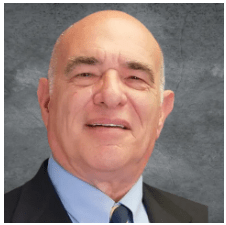 Peter J. Thomas is a veteran conservative political strategist and seasoned policy expert dedicated to upholding the principles of the Constitution and democracy. As a founder and the chairman of the Conservative Caucus, he has played a pivotal role in promoting and shaping the conservative agenda across the nation for over half a century.