

Trump on Ukraine Elections, Venezuela & Europe’s Decline | Dec 09, 2025
Published: December 09, 2025
Network: Worldview Tube
Analysis: Conservative Caucus President Jim Pfaff
President Trump’s recent sit-down interview with Politico has sent shockwaves through the foreign policy establishment, as he delivers unfiltered assessments on Ukraine’s suspended democracy, Venezuela’s criminal export operation, and Europe’s demographic collapse. In a comprehensive discussion with reporter Dasha Burns, Trump’s foreign policy vision reveals a doctrine that prioritizes American interests while holding both allies and adversaries accountable for their actions. The Conservative Caucus President Jim Pfaff joined Worldview Tube to break down the critical implications of Trump’s statements for Western civilization and national security.
Topics Covered
- Trump Demands Elections in Ukraine: “It’s Not a Democracy Anymore”
- Venezuela’s Act of War: Maduro’s Days Are Numbered
- Europe’s Cultural Collapse and the End of Western Values
- Rethinking Alliances: When Europeans Abandon Their Heritage
- The 14th Amendment Fight: Ending Birthright Citizenship Abuse
- Key Takeaways
Trump Demands Elections in Ukraine: “It’s Not a Democracy Anymore”
In one of the most pointed moments of the Politico interview, President Trump directly addressed Ukraine’s failure to hold elections since 2018, challenging the narrative that Volodymyr Zelensky leads a functioning democracy. When asked whether it’s time for Ukraine to hold elections, Trump didn’t mince words: “Yeah, I think so. It’s been a long time. It hasn’t been doing particularly well. You know, they talk about a democracy, but it gets to a point where it’s not a democracy anymore.”
The timing of Trump’s comments is particularly significant given the billions of dollars that have flowed into Ukraine from American taxpayers. Jim Pfaff noted the profound hypocrisy of those who have labeled Trump a dictator while simultaneously rolling out the red carpet for a leader who hasn’t faced voters in over seven years.
“There are so many people that are pro-Ukraine that talk about democracy and talk about the very evil thing that Vladimir Putin did, but none of them talk about this election situation. And here we were in 1864 with, in the middle of a civil war, and Abraham Lincoln had an election.”
— Jim Pfaff, President, The Conservative Caucus
The historical comparison to Lincoln is particularly devastating to Zelensky’s position. Even during the existential crisis of the Civil War, with the nation literally torn in half and Lincoln having suspended habeas corpus, the president still submitted himself to the judgment of the American people. The fact that Zelensky has avoided this democratic accountability while positioning himself as a champion of Western values raises serious questions about the true nature of his government and where American aid dollars are actually going.
Follow the Money
Pfaff highlighted a critical concern: “It only feeds the narrative that potentially there’s hundreds of billions of dollars that have been funneled into that country, not just from us through the Biden administration, but European countries, and it’s going to political benefactors.” Without electoral accountability and transparent oversight, the opportunity for massive corruption becomes almost inevitable.
Venezuela’s Act of War: Maduro’s Days Are Numbered
Trump’s Trump foreign policy approach to Venezuela represents one of the clearest examples of his willingness to treat foreign aggression as what it actually is—an act of war. When Dasha Burns pressed him on whether Nicolas Maduro’s days are numbered and whether American troops could end up in Venezuela, Trump’s response was both strategic and revealing.
Rather than giving the Politico reporter—and by extension America’s enemies—intelligence about potential military operations, Trump turned the tables on the entire premise of the question. “I don’t comment on that. I wouldn’t say that one way or the other,” Trump responded before delivering a masterclass in media criticism: “Why would I talk about that to Politico? I mean, I’m doing this because you picked me as man of the year.”
But Trump’s substantive comments about Venezuela reveal the core of his concern: Maduro has deliberately weaponized immigration against the United States. “He sent us millions of people, many from prisons, many drug dealers and drug lords, mental institution, people in mental institutions. He sent them into our country,” Trump explained, directly linking Venezuela’s actions to the explosion of Tren de Aragua gang activity across American cities.
“What Nicolas Maduro has done to our country, both through the drugs and Tren de Aragua, he did it. It’s a war action and we need to treat it seriously.”
— Jim Pfaff, President, The Conservative Caucus
The Tren de Aragua criminal network represents something more sinister than ordinary gang activity. As Pfaff noted, these weren’t just criminals who came to America and committed crimes—they actively recruited within the United States during the Biden administration, expanding their operations and creating cells throughout the country. This represents a direct assault on American sovereignty that previous administrations refused to acknowledge, let alone address.
Pfaff emphasized the constitutional framework: “You cannot have a military incursion into another country without a declaration of war by Congress. That’s just the constitutional provision. I have no problem though with him leaving that threat out there.” This represents the balance of Trump foreign policy—respecting constitutional constraints while maintaining strategic ambiguity that keeps America’s enemies uncertain and off-balance.
Europe’s Cultural Collapse and the End of Western Values
Perhaps the most explosive segment of the interview came when Trump addressed Europe’s demographic transformation and cultural decay. His assessment was blunt and unsparing: “Most European nations, they’re decaying. They’re decaying.” When Burns suggested that European leaders might be “freaked out” by his posture, Trump didn’t back down: “They should be freaked out by what they’re doing to their countries. They’re destroying their country.”
Trump specifically called out the failures of major European cities that were once symbols of Western civilization. “Look at your mayor of London. He’s a disaster,” Trump said, referring to Sadiq Khan. “I hate what’s happened to London and I hate what’s happened to Paris.” The transformation of these historic capitals from safe, prosperous centers of Western culture into crime-ridden, culturally fractured cities represents a catastrophic policy failure that European leaders refuse to acknowledge.
The example of Sweden is particularly striking. Trump noted that “Sweden was known as the safest country in Europe, one of the safest countries in the world. Now it’s known as a pretty unsafe country. It’s not even believable. It’s a whole different country.” This transformation didn’t happen by accident—it resulted from deliberate policy choices by European leaders who prioritized political correctness over the safety and cultural cohesion of their own citizens.
Historical Parallel: Charles Martel’s Warning Ignored
Jim Pfaff provided crucial historical context: “Two generations before Charlemagne, in the 9th century AD, Arabs were in Spain, mostly, and a little bit in Italy, attempting to take over Europe by force. Charles Martel pushed back the Muslim incursion into the areas of France. And Europe would have gone to a Muslim status just like in the rest of the Ottoman Empire.” The bitter irony is that modern European leaders are now inviting the same cultural transformation that Charles Martel died preventing—except this time it’s happening with their blessing through immigration policy rather than military conquest.
When Burns asked Trump what this means for America’s relationship with Europe, his answer revealed the depth of his concern about Trump foreign policy priorities: “It depends. They’ll change their ideology, obviously, because the people coming in have a totally different ideology.” This represents a fundamental reassessment of the Atlantic alliance—if European nations abandon Western values through their own policy choices, can they still be considered allies in any meaningful sense?
Rethinking Alliances: When Europeans Abandon Their Heritage
Trump’s willingness to fundamentally rethink America’s relationship with Europe based on their adherence to Western values represents a dramatic shift in diplomatic thinking. When asked directly whether European nations that undergo this demographic and cultural transformation would still be allies, Trump responded: “Well, it depends.”
The president’s critique extends beyond immigration to include Europe’s fundamental weakness in the face of these challenges. “I think they’re weak,” Trump said when asked whether he was sending tough love to allies. “But I also think that they want to be so politically correct that I think they don’t know what to do. Europe doesn’t know what to do.”
Jim Pfaff connected Trump’s stance to the broader framework of preserving Western civilization: “If Europe is not going to maintain Western values, which it isn’t at present, then we need to reject that. And they’re paying a price economically.” The economic stagnation that has characterized the European Union for the past two decades stands in stark contrast to the projections that accompanied its formation, with Great Britain’s exit from the EU representing the first major crack in the facade.
“Europe would be in a much worse situation if Donald Trump hadn’t become president in 2016. If Hillary Clinton had become president, Ukraine would have been entirely overrun by Russia. Yes, they should call him daddy because he saved them from themselves.”
— Jim Pfaff, President, The Conservative Caucus
Trump himself noted this dynamic when discussing NATO: “I raised GDP from 2% to 5%. The 2% they weren’t paying and the 5% they are paying.” When Burns mentioned that NATO calls him daddy, Trump’s response was simple: “And they ought to.” This encapsulates Trump foreign policy toward alliances—America will lead and protect, but allies must contribute their fair share and maintain the values that make the alliance worthwhile in the first place.
The European Union’s authoritarian approach to immigration further compounds the crisis. Pfaff explained: “The EU Commission took a vote, which is just dominated by radical leftists primarily, took a vote that EU nations have to accept immigration or else they can’t stay in the EU. So they’re using an economic threat against them.” This top-down enforcement of failed immigration policies represents exactly the kind of centralized authoritarianism that Trump has consistently opposed.
The 14th Amendment Fight: Ending Birthright Citizenship Abuse
The interview also touched on Trump’s ongoing effort to end the abuse of birthright citizenship, with a Supreme Court case pending on the issue. Trump’s constitutional argument challenges decades of misinterpretation: “That case was meant for the babies of slaves. And if you look at the dates on the case, it was exactly having to do with the Civil War.”
The abuse of birthright citizenship has created what insurance professionals would call a “moral hazard”—an incentive structure that encourages exactly the behavior you want to prevent. Trump specifically called out the scam: “That case was not meant for some rich person coming from another country, dropping putting a foot in our country and all of a sudden their whole family becomes United States citizens.”
Jim Pfaff provided analysis of the constitutional history: “If you are willing to read it closely and pay close attention to what’s being said there, not to mention the fact that there are many people who are promoting the bill, standing with this ideal, it was meant to make sure that Democrats, particularly in the South, or any politician anywhere, would deny citizenship of slaves who were brought in to the United States involuntarily.”
The Birth Tourism Industry
The exploitation of birthright citizenship has created an entire industry of birth tourism, with wealthy foreigners—particularly from Russia, China, and Middle Eastern countries—paying to give birth in America specifically to obtain citizenship for their children. This was never the intent of the 14th Amendment and represents a fundamental distortion of American immigration law that Trump is determined to correct.
Trump also addressed immigration from Somalia, specifically calling out former Congresswoman Ilhan Omar: “I don’t want to see a woman that marries her brother to get in and then becomes a congressman, does nothing but complain. All she does is complain, complain, complain. And yet her country is a mess.” His recommendation was direct: “Let her go back, fix up her own country.”
Pfaff’s assessment of Omar and politicians like her was even more pointed: “She’s not an American. She has obtained citizenship along the way. That does not make her an American. It may make her a citizen, but not an American. She’s openly allegiant to Somalia over the U.S.” This distinction between legal citizenship and genuine American identity represents a crucial element of Trump foreign policy thinking—that allegiance and values matter as much as paperwork.
Key Takeaways
- Democratic Accountability Matters – Trump’s demand that Ukraine hold elections exposes the hypocrisy of those who claim to defend democracy while supporting Zelensky’s indefinite postponement of elections. Even Lincoln held elections during the Civil War, setting a standard that modern leaders refuse to meet.
- Venezuela’s Actions Constitute Warfare – The deliberate export of criminals, gang members, and drugs through Tren de Aragua represents an act of war against the United States that demands serious consequences. Trump foreign policy treats this threat with appropriate seriousness while maintaining constitutional constraints on military action.
- Europe’s Cultural Collapse Threatens Western Civilization – From London to Paris to Sweden, once-safe European cities have been transformed by failed immigration policies and political correctness. Trump’s willingness to condition alliance relationships on maintaining Western values represents a dramatic but necessary shift.
- NATO Relationships Require Reciprocity – Trump’s success in raising NATO defense spending from 2% to 5% of GDP demonstrates that American leadership works when backed by firm expectations. European nations owe their current security situation to Trump’s first term, not their own foresight.
- The 14th Amendment Was Not Meant for Birth Tourism – Trump’s constitutional case against birthright citizenship abuse focuses on the amendment’s original intent to protect former slaves and their children, not to create incentives for foreign nationals to game the system for citizenship benefits.
- American Identity Requires More Than Paperwork – Trump and Pfaff’s discussion of Ilhan Omar highlights a crucial distinction between legal citizenship and genuine American allegiance. Politicians who openly prioritize foreign nations over American interests violate their oath of office regardless of their citizenship status.
- Media Accountability Matters – Trump’s refusal to provide operational details to Politico while calling out the publication’s bias demonstrates the importance of not allowing hostile media to extract information that benefits America’s enemies. Trump foreign policy includes not telegraphing strategies to adversaries through complicit media.
Share This Analysis
Join The Conservative Caucus
Stand with thousands of Americans defending constitutional principles and the rule of law.
About The Conservative Caucus:
The Conservative Caucus is a grassroots public policy action organization, formed in 1974. Headed by President Jim Pfaff, the Caucus is committed to advancing free enterprise, limited government, and traditional values.
Originally broadcast December 09, 2025 on Worldview Tube.




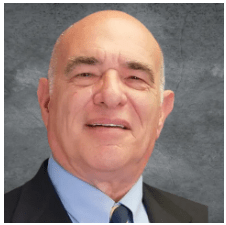 Peter J. Thomas is a veteran conservative political strategist and seasoned policy expert dedicated to upholding the principles of the Constitution and democracy. As a founder and the chairman of the Conservative Caucus, he has played a pivotal role in promoting and shaping the conservative agenda across the nation for over half a century.